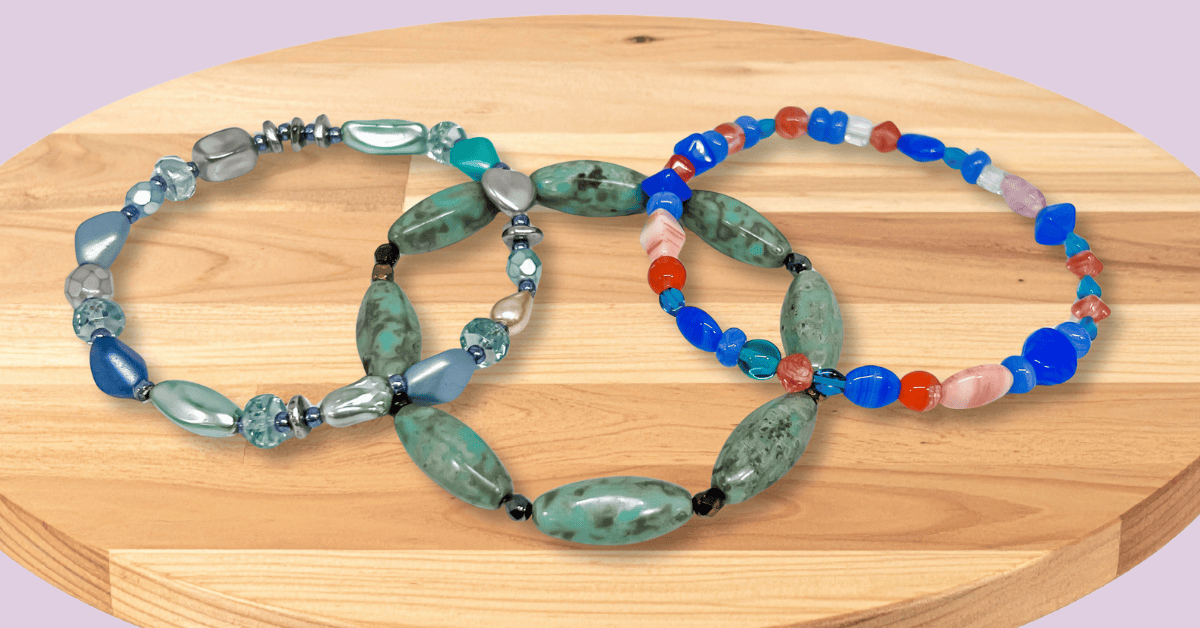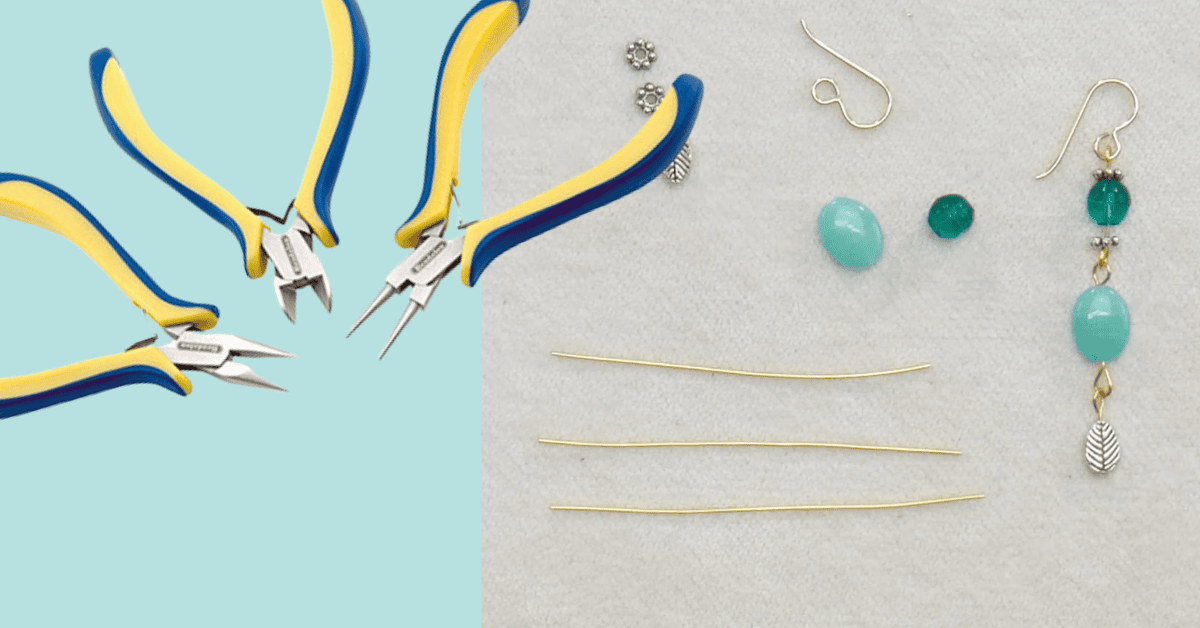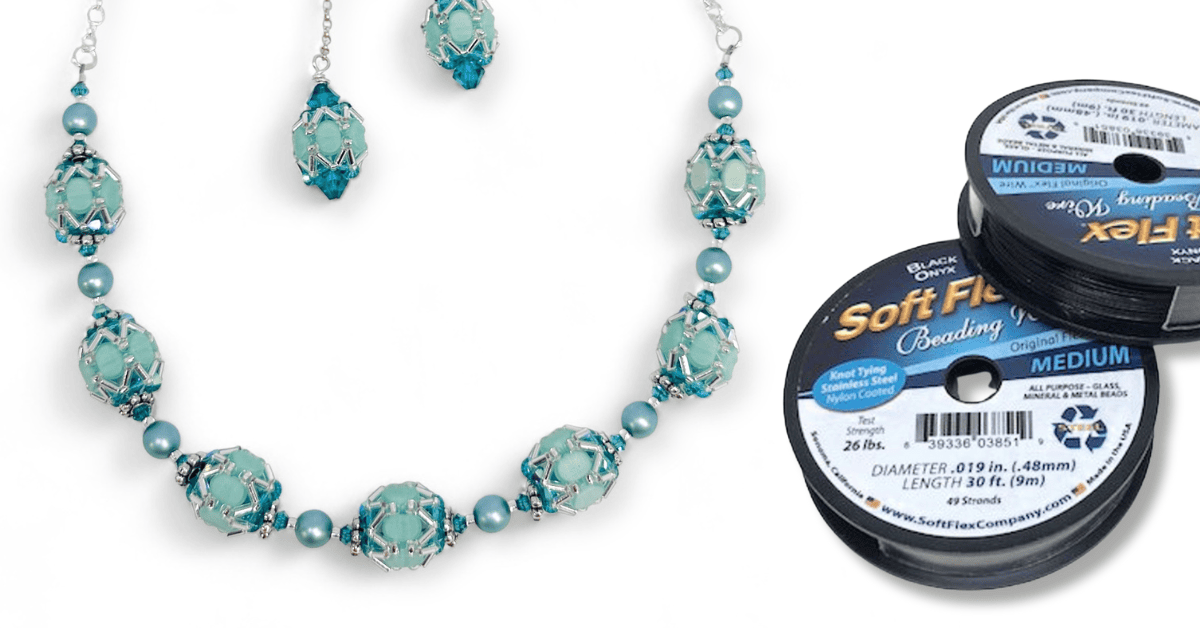
So, you’ve bought some gorgeous new beads and want to know how to turn them into a beautiful beaded necklace? Bead stringing is a great place to start with making your own beaded jewelry.
Beading wire is a staple for creating jewelry. There are several different types of beading wire on the market and they come in different diameters and ‘strands’ – so it can be a little confusing when you’re just starting out! Here I break it down for you and explain the different types of beading wire available and when you should use each.
How do I know which diameter of beading wire to choose?
First of all, you’ll want to make sure that the beading wire fits through your beads! If you’re using a bead with a small hole such as a freshwater pearl, you’ll need a finer wire. You’ll also want something sturdy and strong, so pay attention to the weight listed on the wire too. Heavier beads will need a stronger weight of wire.
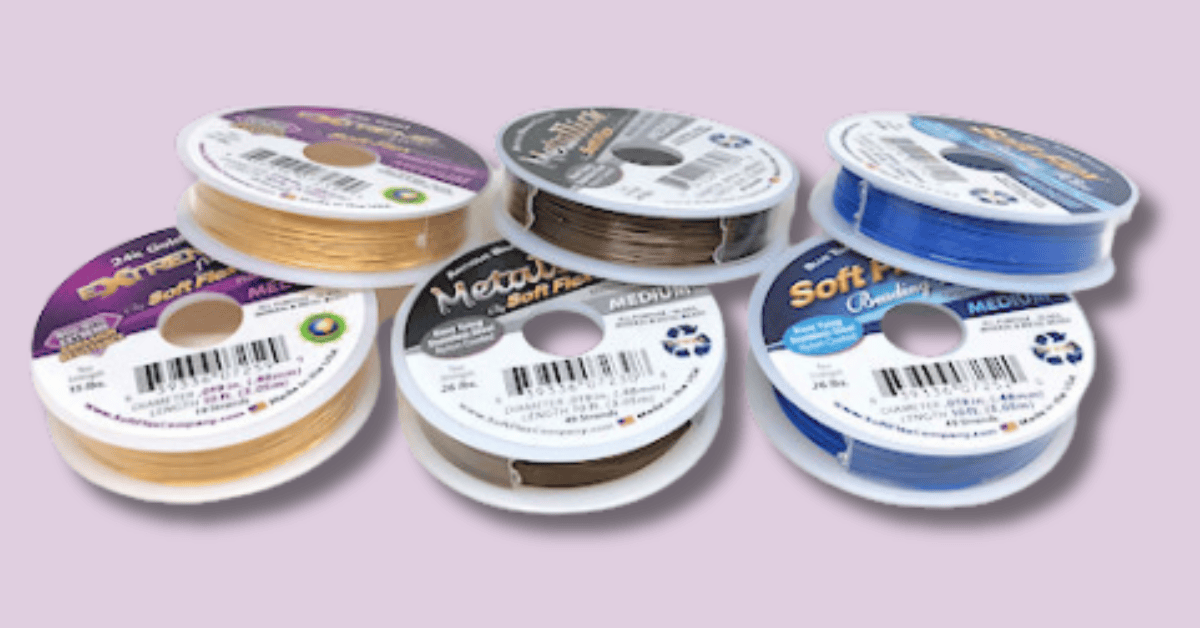
Here at Jill Wiseman Designs, we carry SoftFlex beading wire, which is known for its superior quality. This wire comes in different diameters and weights, meaning you can find something to suit your project.
Soft Flex beading wire comes in a huge array of colors, so you can choose something that tones nicely with your beads.
What do the strand numbers mean on beading wire labels?
You’ll see on beading wire packaging that, as well as the diameter, a number of strands is listed. Beading wire is made up of multiple strands of micro-woven stainless steel wires, which have then been coated in nylon to seal them together.
The strand count refers to the number of strands of wire that have gone into creating the beading wire – the more strands used, the more flexible the piece of wire will be!
How do you fasten beading wire?
While it’s possible to knot SoftFlex, the best way to finish off a beaded necklace or bracelet is by using a crimp bead to secure your clasp. I have a great video that covers finishing off your strung beaded jewelry.