What’s the difference between opal and opalite? Why are opals unlucky? Discover everything you need to know about using opal beads in your handmade jewelry.
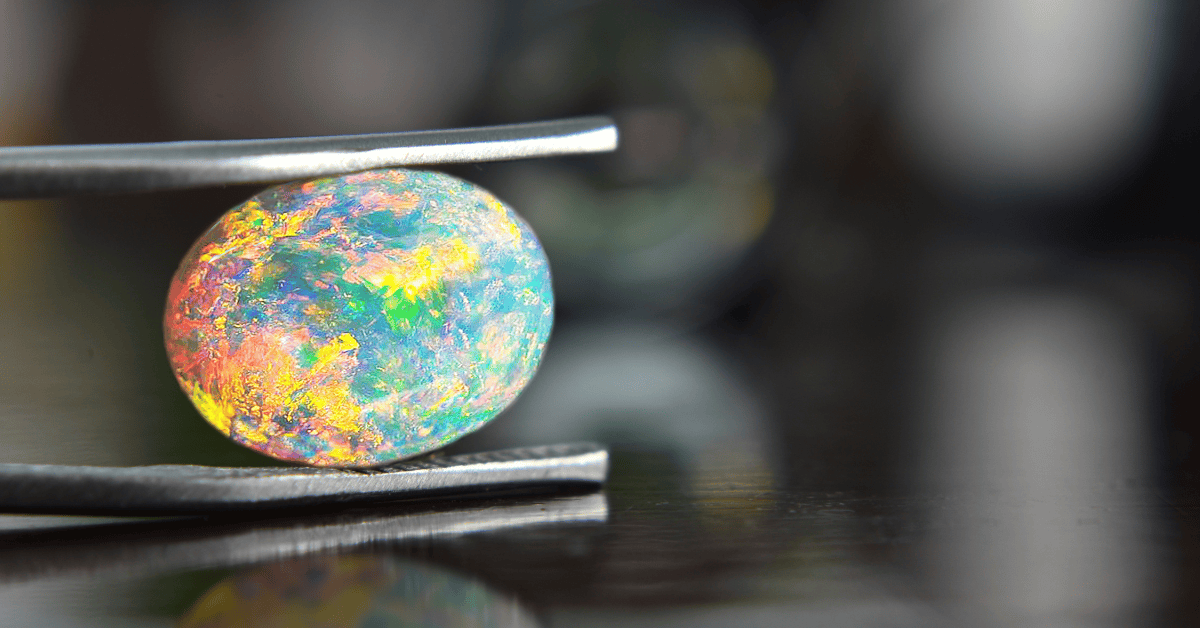
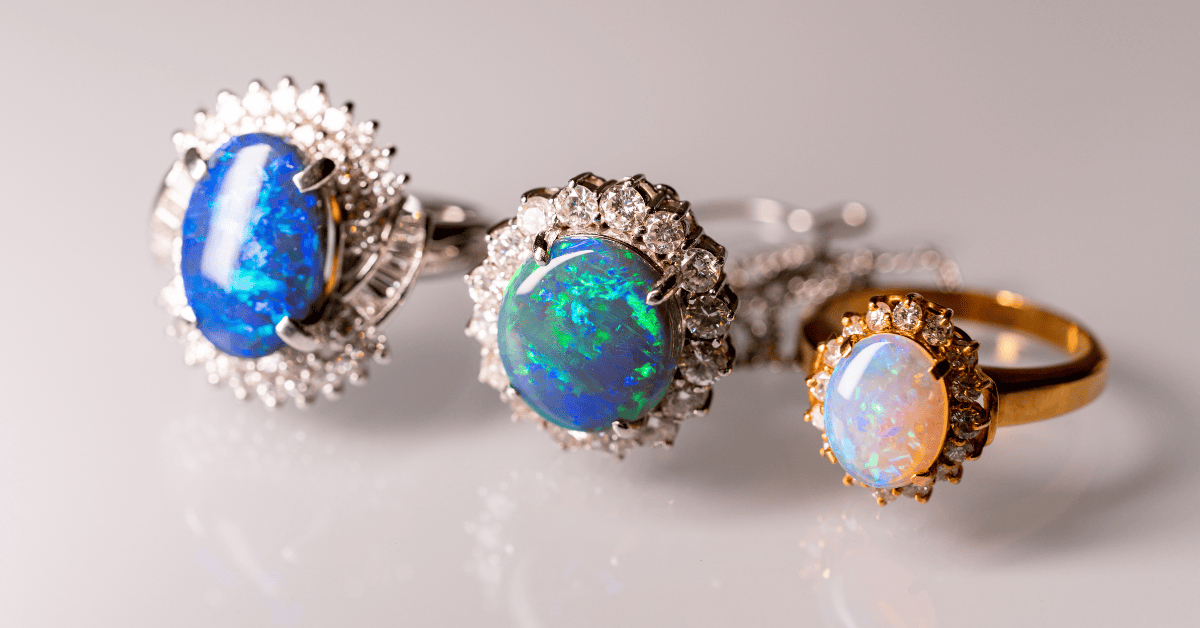
Opal – the birthstone for October and a popular anniversary gift for 24th wedding anniversaries! This sought-after stone comes in many hues and is known for its rainbow play-of-color appearance. It can appear clear or milky, iridescent or fiery – or glassy (vitreous) without fire. It is often found as smaller stones and presented polished.
Opals are not a rare stone, they are easily obtained but can be expensive – they fall into two categories: common and precious. Precious opals are those opals that display a play-of-color, such as boulder, black and fire opals.
Opals are sourced from Australia, Mexico, Peru, South America, UK, USA, Canada, Hondurus and Slovakia!
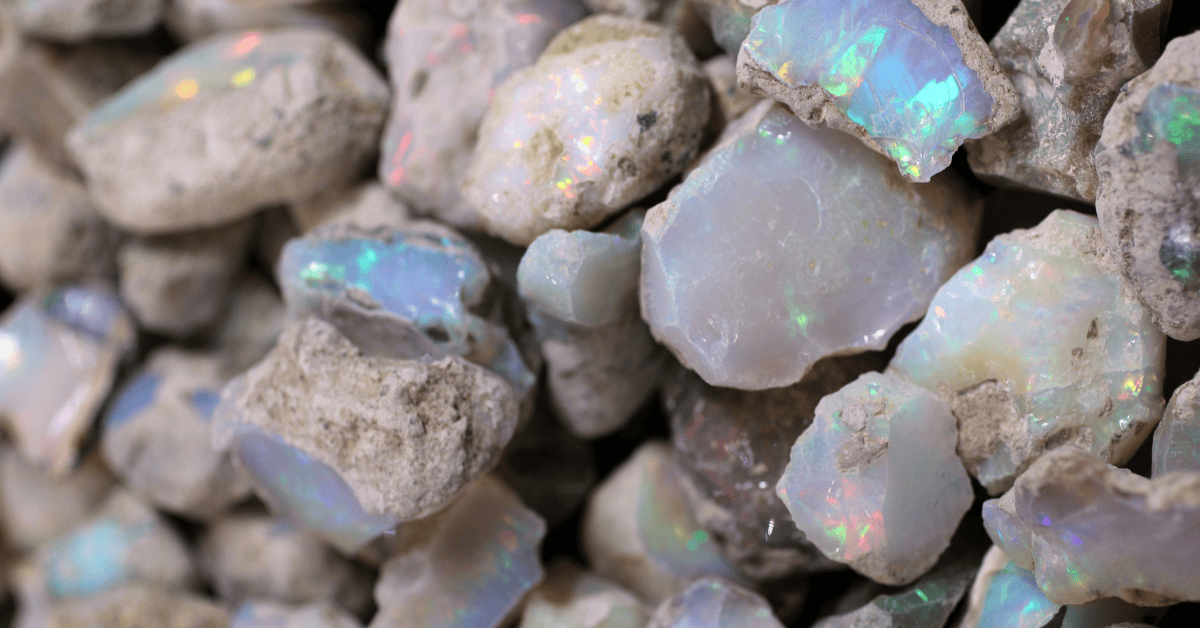
Sometimes thought of as unlucky, this myth has possibly been perpetuated thanks to a 1829 novel by Sir Walter Scott, Anne of Geierstein, or the Maiden of the Mist.
Opals are a soft stone, rated 5-6.5 on the Mohs scale. They can be easily damaged with hard wear, and this could also be part of the reason they are considered unlucky.
There are many different colors of opals; blue, white and fire opals are very popular for use in jewelry. The rarest opals are black opals, which are ONLY found in Australia and are mined in the outback in New South Wales. Black opal is highly prized for its spectrum of colors.
Using opals in jewelry
The best way to clean an opal is with a soft cloth and warm soapy water. They can be easily scratched, so when stringing opals in your jewelry designs, be sure to separate them with spacer beads, especially when designing necklaces or bracelets that include other, harder gemstones.
What is opalite
There are two types of opalite! There is a form of natural opal that comes in greens and purples, with a cat’s eye effect that is sometimes called ‘opalite’.
Usually, though, when you hear the term opalite, it refers to the synthetic version.
Opalite is a manmade synthetic opal, created using glass. While not a true gemstone, you will often find opalite sold alongside natural gemstones. It had a resurgence in popularity in 2025 after pop star Taylor Swift named a song after it!
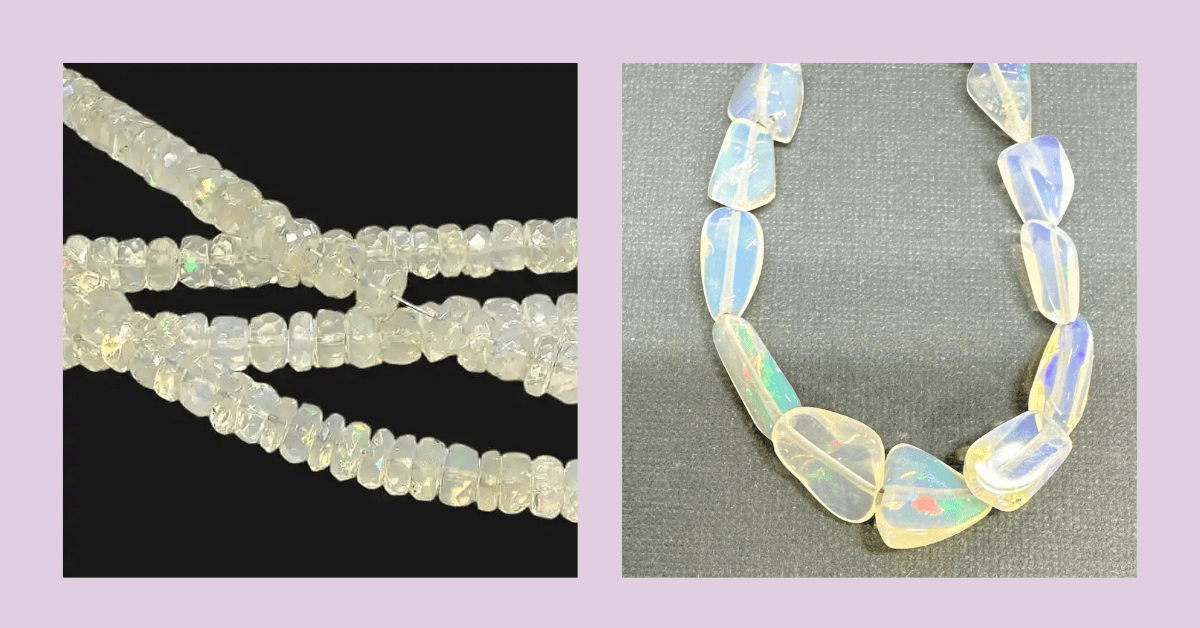
Look out for opalite being passed off as true opal – you can often tell the difference as opalite is usually translucent and without any ‘fire’, although it can appear similar to glassy opals such as the Ethiopian opal shown below. When oplaite is sold as loose ‘stones’ it’s usually in a cube shape, which makes it easier to tell apart.
It’s also possible to buy ‘faux opal’, which is usually made from resin or acyric. Although this can look very similar to real opal, it is much lighter in weight.
Opal stone benefits
Some people attribute certain qualities to opal – it is thought to enhance cosmic consciousness and is associated with the heart and solar plexus. Different colors of opals are attributed with different benefits – a fire opal is thought to enhance personal power, while blue opal realigns spiritual purpose.
Opal is associated with the Libra Zodiac and is considered a lucky stone for Taurus too.