What is aventurine and how can you best use it in your handmade jewelry creations? We uncover the facts about this pretty gemstone…
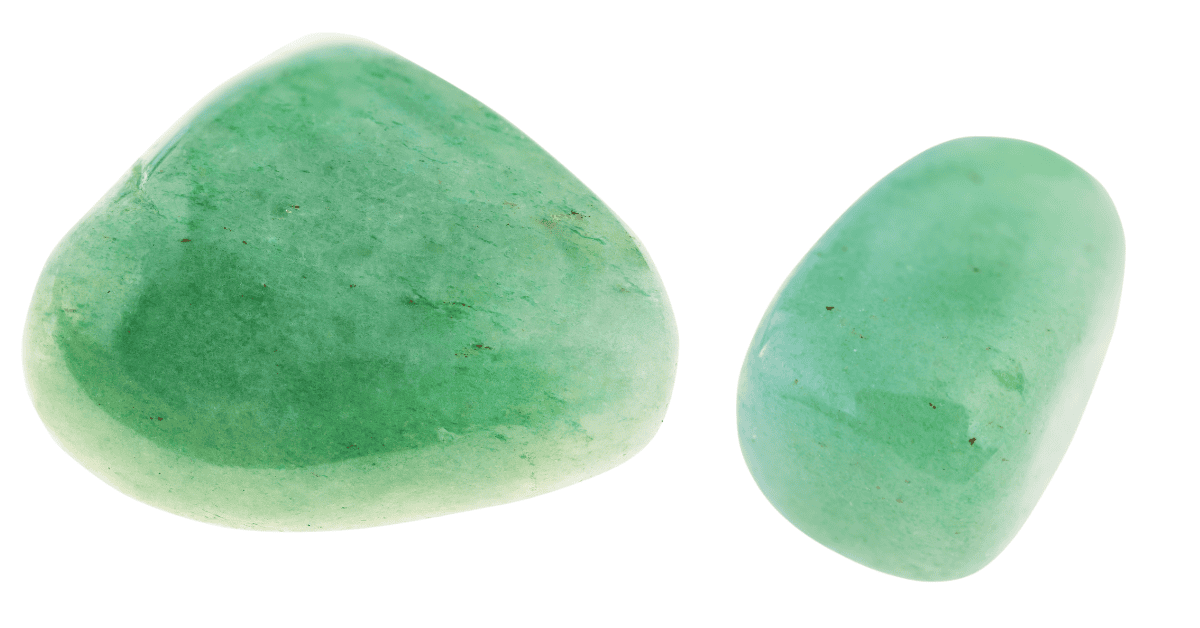
Aventurine is a stone that is opaque, speckled with shiny particles and sometimes semi-translucent. A member of the quartz family, when we think of aventurine we usually think of the green variety, however, it comes in many shades from red to peach, and even blue.
Aventurine is sourced from around the world, including Italy, Brazil, China, India, Russia, Tibet and Nepal. The sparkling inclusions found in aventurine usually come from fuchsite or hematite inclusions. It is a relatively hard stone, ranking at 6.5-7 on the Mohs scale.
As a birthstone, there is some contradiction over which month aventurine stands for – but it is often used as an alternative stone for March, May and August.
Using aventurine in jewelry
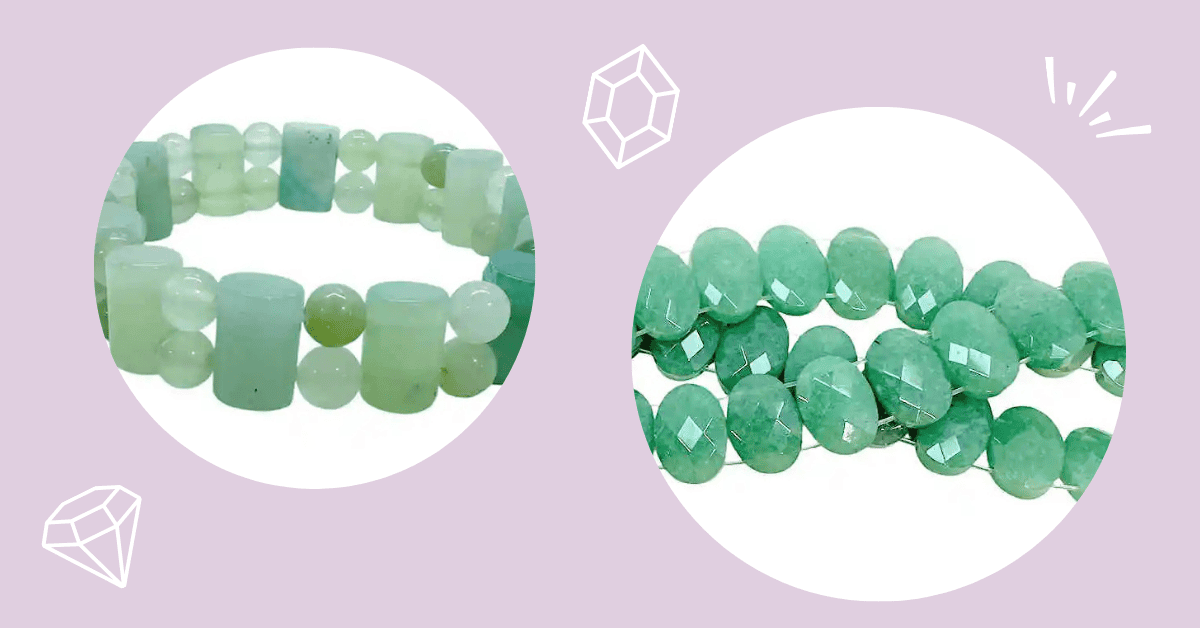
It is readily available and popular in jewelry designs. Due to its look, aventurine is often chosen for carved pendants, and can be purchased as faceted rondelles, as well as round beads and cabochons.
Aventurine is a relatively hard-wearing stone, making it ideal for day-to-day jewelry such as necklaces and bracelets. Care should be taken to avoid scratches. Using spacer beads can prevent this, and we recommend it especially if you plan to use aventurine gemstone beads alongside harder gemstones.
The different shades of aventurine make it really versatile for beaded jewelry; it can look earthy and natural in stacked bracelets or paired with leather – or feel high-end and elegant alongside pearls and cut crystals. The choice is yours!
Aventurine stone benefits
Aventurine is often thought of as being a positive stone, bringing prosperity and good luck. It is attributed with being able to protect against electromagnetic smog and environmental pollution. Aventurine is thought to promote compassion, empathy and leadership qualities. It is also attributed with healing capabilities. The stone is associated with the heart chakra.